Hurry up! only 20 products left in stock!
Unfortunately 20 products left in stock!
The Stilo vase is born from a process of manual experimentation in which the surface—usually smooth and flawless—is transformed into a tactile, living landscape through streaks and scratch marks made entirely by hand. On the lathe, the engraved surface reflects the Blueside philosophy: beauty can also arise from imperfection. Each vase thus becomes a unique, one-of-a-kind piece in which the material finds its own voice and character.This is the ultimate example of the Japanese philosophy of Wabi-Sabi
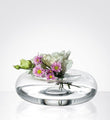
Stilo fits naturally into any setting, complementing fresh flowers, preserved arrangements, or dried natural elements such as palms and pampas grass. Its textured surface enhances whatever it holds, as if the glass itself participates in the beauty of the flowers. It is the perfect gift for any anniversary, whether a birthday or a special occasion. Flower lovers will appreciate its thickness and distinctive texture.
With Stilo, design becomes gesture, material, and light: an object that transforms every space into a small story of craftsmanship and contemporary poetry.
This vase is designed to enhance essential, elongated compositions. Its narrow opening makes it perfect for a single statement flower or for 2–3 slender stems, creating a minimal and elegant effect. It is ideal for modern, Nordic, and contemporary interiors, or for anyone who appreciates a clean and refined aesthetic.
In spring, the vase pairs beautifully with fresh, delicate flowers featuring soft lines.
A timeless choice is a single long-stemmed tulip, perfectly balanced in proportion. Even when the flower naturally bends, it creates an elegant and spontaneous effect.
The ranunculus, with its full and romantic bloom, is ideal as a single flower. In shades of white, blush, or coral, it enhances the vase’s essential character without overwhelming it.
For those who prefer more movement, 2–3 stems of freesia can be added, bringing lightness and a delicate fragrance while maintaining a sober and refined style.
In summer, you can experiment with slightly more structured flowers while maintaining vertical elegance.
White lisianthus represents a perfect standard proposal: elegant, neutral, suitable for any environment, and available for most of the year. Used as a single stem, it creates a refined and timeless composition.
Cosmos, with its natural and airy appearance, also pairs beautifully with the vase, especially in more informal settings.
For a more striking yet still vertical effect, a single-stem delphinium enhances the vase’s height and adds presence without excessive volume.
In autumn, slightly more textured flowers in warm tones are ideal.
A medium-sized dahlia used as a single stem creates an important focal point while remaining proportionate to the narrow opening of the vase.
Modern chrysanthemums, in their more elegant and contemporary varieties, are an excellent option thanks to their long-lasting nature and rich forms.
Alternatively, for a more contemporary and decorative look, autumn branches or amaranthus can be used to emphasize the vase’s verticality and minimalist character.
During winter, the vase lends itself to essential compositions with strong personality.
The anemone, with its dark center and light petals, is perfect as a single flower and creates a refined contrast.
Hellebore is another elegant and delicate option, ideal for bright, minimal interiors.
For those who prefer a timeless and low-maintenance solution, a single branch of eucalyptus or olive represents a modern choice, also suitable for showroom display or year-round styling.
Borosilicate glass 3.3
Diameter x Height: 100 x 220 mm
Opening: 35 mm
Suggested song: AC/DC – Back In Black 🎸

Delivery UE shipping cost: 30€ Delivery extra UE: on request

Secure payments

Delivery in 4-6 working days

Customer care