

In contemporary design, there is an increasingly strong focus on essentiality, materiality, and meaning. Within this context lies the concept of wabi-sabi, a Japanese aesthetic philosophy that invites us to recognize beauty in imperfection, in the passage of time, and in forms that are not perfectly symmetrical.
It is not just a style, but a way of observing objects: every mark, every irregularity becomes part of their story. Hand-engraved glass perfectly embodies this idea, transforming matter into something alive, authentic, and unique.
The Stilo vase is born from this very vision. Thick glass, manually engraved, creates a surface that is never identical, capable of reflecting light in an irregular and natural way. It is not an object that imposes its presence, but one that interacts with its surroundings, evolving with them.
Around Stilo, a narrative can be built through objects that share the same philosophy: balance, simplicity, and authenticity.

Gaz: Small Natural Accents that Complete the Composition
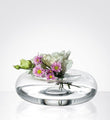
Alongside the vertical and structured presence of Stilo, the Gaz small vase introduces a softer, more spontaneous dimension. Its rounded, compact shape creates a harmonious contrast with the linearity of the main vase.
Placing Gaz next to Stilo allows for a layered composition, where large and small coexist without competing. It is perfect for holding single flowers, short branches, or small wild elements, creating a natural, unforced effect.
To enhance the overall composition, the key is reduction: a few carefully chosen elements. A light wood surface or a neutral shelf allows the glass to emerge discreetly, leaving space for light and transparency.

Lotus Big: The Base that Brings Rhythm to the Composition
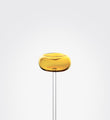
The Lotus Big plate adds a horizontal dimension, becoming the ideal base for a centerpiece or decorative setting.
Its cavities allow the placement of small natural elements - stones, dried flowers, low candles, or seasonal details - creating a dialogue with the Stilo vase that develops both vertically and horizontally. This adds dynamism without losing stylistic coherence.
For a harmonious effect, Stilo can be positioned slightly off-center on the plate, allowing the other elements to fill the space naturally. The result is a composition that feels organic rather than rigid.

Chapeau: The Light Gesture that Completes the Whole
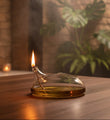
The Chapeau plate, with its inclined shape and mouth-blown glass, introduces a dynamic element that contrasts with the stillness of the Stilo vase.
If Stilo represents solidity and presence, Chapeau brings movement and lightness. It can be used to hold small objects, fruit, or decorative elements, or simply as a scenic base that reflects light and enhances transparency.
Together, they are ideal for contemporary spaces, where each object contributes to a balance between solids and voids. Placed on a table or console, they create an elegant yet flexible composition, capable of adapting to the changing rhythms of home and seasons.

The Value of an Object that Evolves Over Time
Choosing an engraved glass vase like Stilo means embracing a vision of design that goes beyond immediate aesthetics. It is an object that changes with light, with what it holds, and with the context in which it is placed.
Together with Gaz, Lotus Big, and Chapeau, it does not create a simple decorative composition, but a coherent system of elements in dialogue. Objects that do not seek perfection, but balance.
Ultimately, this is the essence of wabi-sabi: finding beauty in authenticity, in imperfect details, and in transformation—and allowing each object to tell a different story over time.