
A bottle is opened while the final dishes are being placed on the table. The gentle sound of glass. A warm light passes through the glass, changing colour with the wine. Then comes the first sip, when the conversation has already begun and the table starts to find its own rhythm.
Choosing the right glass is also about this: giving the wine the space it needs to express itself and turning an everyday gesture into a small ritual.
There is, however, no single perfect glass for every wine. Reds, whites and sparkling wines have different characteristics, and the glass can complement each of them in a different way. The glass itself becomes part of the experience: transparent, light, illuminated by its surroundings and capable of bringing a contemporary touch to the table.
White wine: when lightness meets light

Outside, it is still bright.
The window is open. On the table there is bread, olive oil, a few aromatic herbs and a freshly poured white wine. The last rays of sunlight pass through the glass and, for a moment, it seems that only the colour of the wine and the light remain.
A white wine glass is designed for a generally fresher, more immediate tasting experience. It should give the aromas room to unfold without weighing down the sip, preserving that sense of balance and lightness that makes white wine so enjoyable.
For this moment, we choose Modigliani WHITE, the Blueside glass designed for white wine. Its silhouette is slender, clean, almost silent: a shape that does not seek to impose itself, but simply accompanies the gesture, allowing the wine, the light and the table to speak for themselves.
In an understated table setting, surrounded by natural linen, neutral ceramics and glass details, Modigliani WHITE becomes part of the atmosphere. The transparency of the material captures the reflections of the light and enhances the colour of the wine without distraction.
It is an elegant yet effortless glass, perfect for an outdoor dinner, a leisurely lunch or an aperitif that lingers until sunset.
A glass that does not ask for attention. It receives it.
Red wine: when the wine meets the air

A dinner that continues longer than expected. The candles have burnt lower, only a few things remain on the table, and someone pours just a little more wine.
Red is often the wine of unhurried moments. Of aromas that evolve in the glass, nuances that emerge slowly, and that almost instinctive gesture of swirling the wine before bringing the glass to the nose.
For this reason, the choice of glass should encourage the interaction between wine and oxygen, particularly when tasting important or mature red wines.
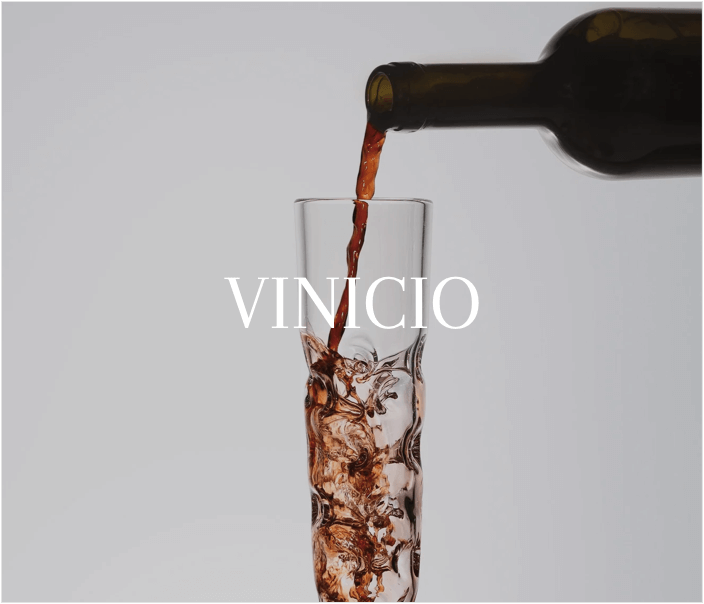
For this moment, we have chosen Chàdi, Blueside’s oxygenating wine glass.
Special glass protrusions at the bottom of the glass interact with the wine as it is swirled, gently increasing its contact with the air.
Blueside particularly recommends Chàdi for aged red wines, helping to enhance their aromatic expression; the glass is also designed for young wines, whites and orange wines.
The gesture itself becomes part of the tasting experience: pour the wine, slowly swirl the glass and watch the reflections and nuances shift against the glass.
Chàdi does more than simply hold the wine. It invites it to move.
And as the red wine meets the air, the tasting ritual becomes slower, more conscious, almost contemplative.
Sparkling wine: when the table changes rhythm

Then comes the toast.
Not necessarily one reserved for a special occasion. It might mark the beginning of a dinner, a return home, or an unexpected gathering.
The bottle is opened, conversations pause for a moment, and a delicate stream of bubbles begins to rise through the glasses.
Sparkling wines and Champagne naturally evoke a sense of movement. The glass can interpret this too, with shapes capable of turning a simple toast into something personal.
For sparkling wine, we have chosen Plustio.
Its shape comes from the reinterpretation of a laboratory test tube, transformed into a flute. Made from 3.3 borosilicate glass, Blueside presents it as a sparkling wine glass with an essential and deliberately unconventional form.
It is perhaps one of the most interesting examples of the Blueside design language: a shape borrowed from the scientific world takes on a new function, enters everyday life and becomes design. It is a particularly meaningful connection for the brand, whose story began with expertise in scientific glass before evolving into Emotional Design.
On the table, Plustio makes a distinctive, contemporary statement. The bubbles rise through its vertical form, while the glass itself almost disappears.
What remains is the movement. What remains is the toast.
Red, white or sparkling: does the right glass change the way we drink wine?
The shape of the glass cannot, of course, replace the quality of the wine, but it can change the way we approach it, observe it and taste it.
With a structured red wine, encouraging oxygenation can be important. With a white wine, the aim is generally a fresher, more delicate tasting experience. With sparkling wine, the shape of the glass also contributes to the visual pleasure of the perlage and to the ritual of the toast.
But there is another dimension, one that is more difficult to measure.
It is the pleasure of choosing an object that reflects who we are.
The glass we reach for when someone comes to visit. The one we reserve for a special bottle. The one that, when the light passes through it, transforms the table without the need to add anything else.